Utility vs. Entertainment Screen Time: What Research Actually Says



One of the most important questions parents ask today is whether all screen exposure affects young children equally:
This question gets right to the heart of modern parenting anxiety. Almost all pediatric screen time guidelines lump every digital screen into a single category. But as developmental neuroscience demonstrates, the type of screen content, pacing, and how it impacts parent-child interaction make all the difference.
Here is a breakdown of what peer-reviewed research tells us about utility tools, background media, and finding balance in the home.
It is indisputable that unmonitored, passive background media can negatively affect infants and toddlers. A landmark study published in the Journal of Child Language examined infant-directed speech in households with background television:
Citation: Keşşafoğlu, D., Yıldız, E., Küntay, A. C., & Uzundağ, B. A. (2025). Infants' background television exposure and maternal language input: A home observation study. Journal of Child Language, 1–21. (PMID: 41229212 | DOI: 10.1017/S0305000925100391)
Key Finding: Home observations revealed that the total number of words, vocabulary diversity, and direct questions in maternal infant-directed speech were consistently lower when background television was active.
When a screen constantly pulls a parent's or child's focus away, the natural verbal back-and-forth essential for early brain development drops significantly.
Where the nuance lies is in the pacing and design intent of the screen. A critical study published in Pediatrics (American Academy of Pediatrics) compared the immediate effects of different screen experiences on young children's executive function:
Citation: Lillard, A. S., & Peterson, J. (2011). The Immediate Impact of Different Types of Television on Young Children's Executive Function. Pediatrics, 128(4), 644–649. (PMC ID: PMC9923845 | DOI: 10.1542/peds.2010-1919)
Key Finding: 4-year-olds who watched just 9 minutes of fast-paced, rapidly edited cartoons suffered immediate impairment in self-regulation and executive function (delay-of-gratification & Tower of Hanoi tasks) compared to children who watched slow-paced educational television or spent time drawing.
Fast, active entertainment screens are engineered specifically to hijack visual attention via rapid camera cuts and bright flashes. In contrast, utility applications—like a phone calculator, digital grocery list, e-reader, or The Morning Map—feature static or gentle pacing. They do not trigger rapid dopamine hits or hijack executive function.
Ultimately, the key finding across developmental studies is that screen exposure matters primarily because of opportunity cost: how much does the screen take away from meaningful parent-child interaction?
Citation: Li, D., & Guo, X. (2023). The effect of the time parents spend with children on children's well-being. Frontiers in Public Health, 11, 1147530. (PMC ID: PMC10106685 | DOI: 10.3389/fpubh.2023.1147530)
Key Finding: Dedicated parental involvement and leisure interaction time directly correlate with higher child psychological well-being and life satisfaction scores.
Using a calculator to tally groceries or looking at a digital calendar for 30 seconds does not isolate you from your child. In fact, narrating what you are doing ("I'm checking our calendar to see when soccer practice starts!") actually turns utility screen use into a positive language-building moment.
However, any discussion of screen time is incomplete without considering the adult in the room: you.
Parental burnout is a serious, growing phenomenon in modern Western cultures, driven by intense social expectations to be a "perfect" parent at every second of the day:
Citation: Roskam, I., Aguiar, J., Akgun, E., Arikan, G., Artavia, M., Avalosse, H., ... & IIPB Consortium. (2021). Parental Burnout Around the Globe: A 42-Country Study. Affective Science, 2(1), 58–79. (PMC ID: PMC7970748 | DOI: 10.1007/s42761-020-00028-4)
Key Finding: Western countries exhibit significantly higher rates of parental burnout (scoring 92+ on the PBA scale) due to high individualism and cultural perfectionism pressures.
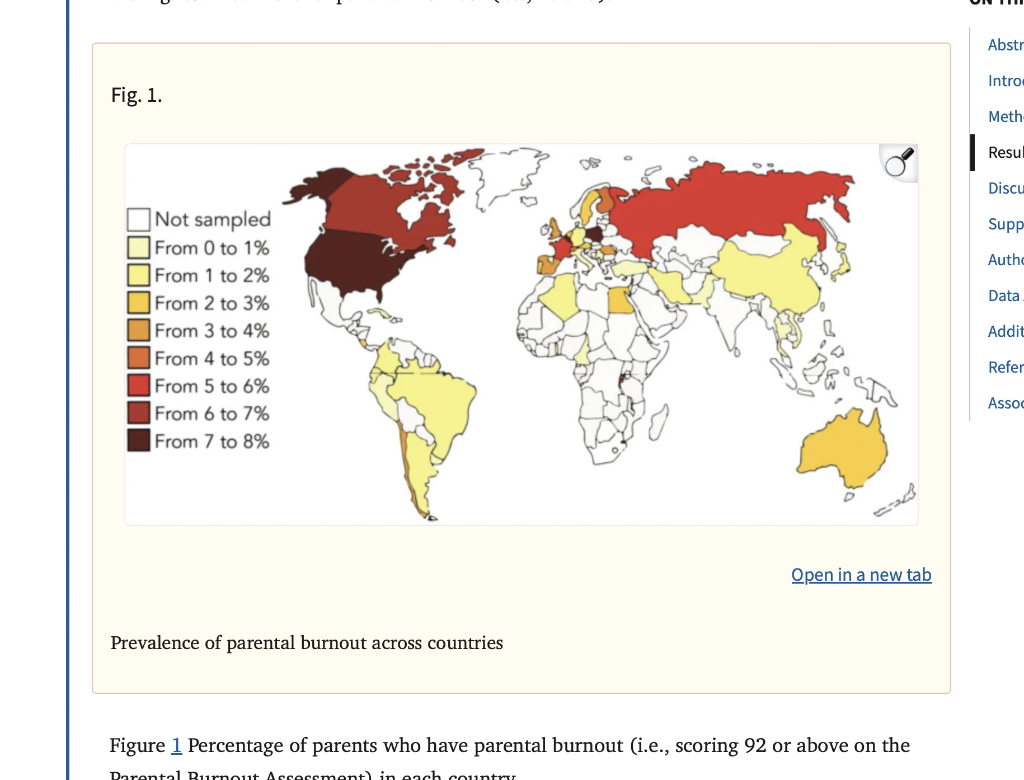
When parents attempt to ban every single digital tool out of guilt, their cognitive load skyrockets. Trying to memorize endless schedules, grocery lists, and morning steps without digital assistance leads directly to exhaustion and elevated cortisol.
After reviewing the peer-reviewed science, the takeaway for parents comes down to a clear, balanced threshold:
Tools like The Morning Map visual TV timer were built specifically around this balance—providing passive, ambient timekeeping that reduces parental stress and eliminates morning nagging without trapping kids in front of an addictive entertainment screen.
Transform your living room TV into a calm, ambient visual pacer. Available for free on Apple TV, Roku, Fire TV, iOS, and Android!
Supported Platforms: Apple (iOS & Apple TV) • Google Play (Android) • Amazon Appstore (Fire TV) • Roku